Cell-level fusing is not required to build what is generally considered a safe lithium-ion battery. Instead, it is one of several layers of protection that can be used to further increase overall battery safety. Modern lithium-ion cells already include multiple built-in safety features, and if those features did not exist, then cell-level fusing would be mandatory in order to achieve acceptable safety.
Because these internal protections are present, we do not have to rely on cell-level fusing alone. That being said, cell-level fusing absolutely reduces the amount of drama that can occur during a failure event and does make a battery system safer overall. We are simply already at a point where the combination of the cell’s internal protections and a properly designed BMS can produce a battery that is safely usable without adding anything further.
Of course, if the application demands a higher safety standard, such as use in aircraft, medical equipment, or other mission-critical systems, then it makes sense to apply every safety measure possible, including cell-level fusing.
In this article, we will take a look at the protection mechanisms that are built into just about any quality lithium-ion cell. The phrase “just about any” is important, because there are some very poor cell manufacturers in the market. However, any manufacturer worth their weight in lithium implements all of the mechanisms discussed below.
Separator Shutdown Mechanism
Inside a lithium ion cell, there is a very thin microporous separator film between the anode and cathode. This separator allows ion mobility from the negative electrode to the positive electrode through the electrolyte, while electrons flow through the external circuit.
When the separator reaches a critical temperature, those microporous channels begin to close. This prevents ion flow inside the cell and, as a result, stops electron flow on the outside of the cell. For PE (polyethylene) separators, this shutdown typically occurs around 120-130 °C. For PP (polypropylene) separators, shutdown occurs at higher temperatures, usually around 150-160 °C.
Modern cells often use a combination of PE and PP layers. After the PE melts and initiates shutdown, the PP layer remains intact, preventing a direct internal short. This safety feature is purely temperature-triggered and acts as a passive, automatic response to overheating.
CID (Current Interrupt Device)
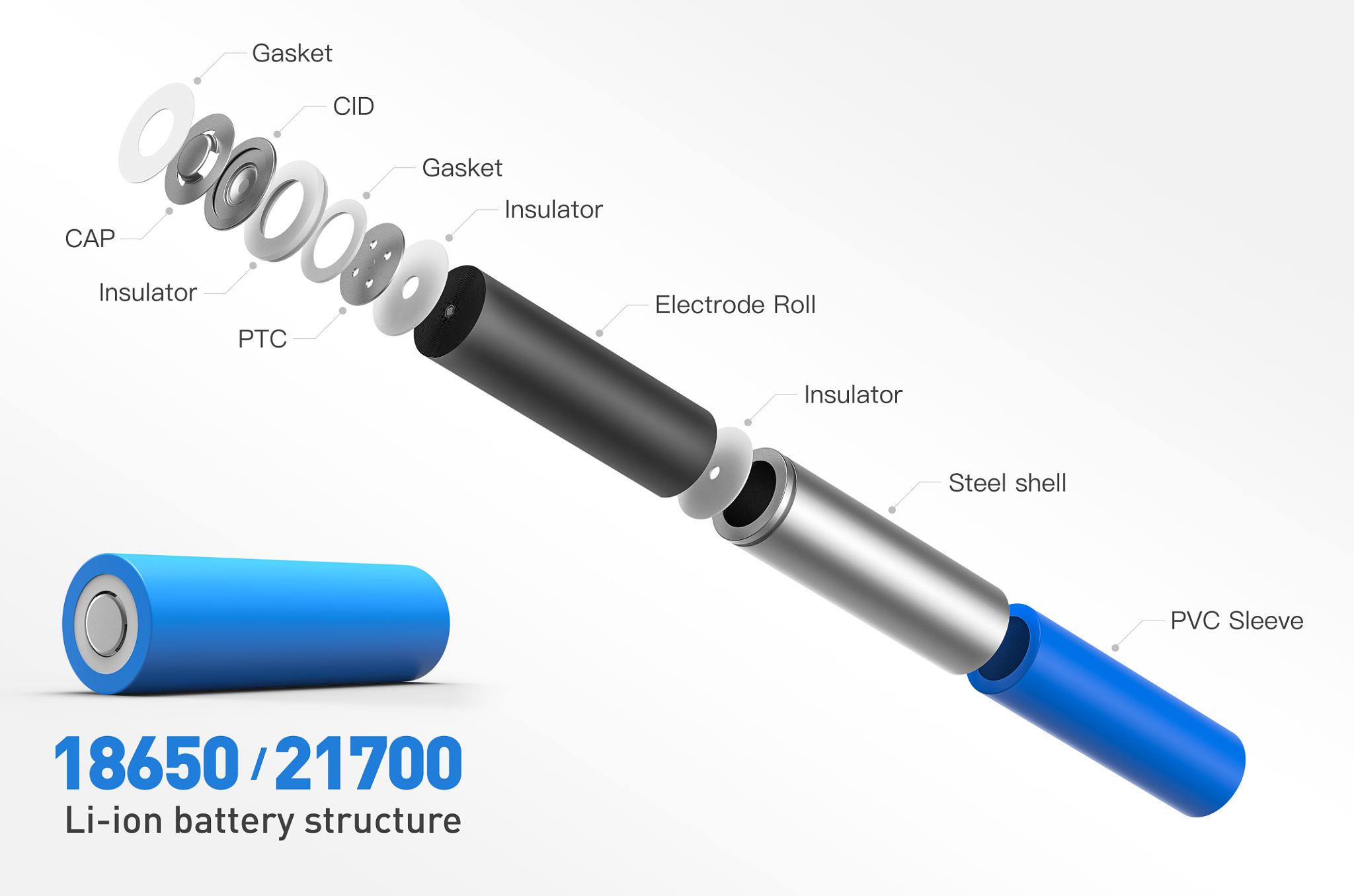
Another critical built-in protection is the Current Interrupt Device, or CID. Despite the name, the CID is not triggered by current. Instead, it's triggered by internal pressure. This mechanism is mechanical, single-use, and is integrated into the top cap of any 18650 or 21700 cell worth using.
The CID activates when internal gas generation causes pressure to rise faster than it can be safely vented. Common causes include overcharging, severe overheating, internal short circuits, or electrolyte decomposition due to a breached cell.
The device works by using a thin metal diaphragm that gradually domes upward as pressure increases. At a calibrated pressure threshold, the diaphragm permanently breaks the electrical connection inside the cell. When this happens, the cell becomes electrically open, meaning its completely and permanently disconnected.
PTC (Positive Temperature Coefficient)
The third major protection mechanism is the Positive Temperature Coefficient device, or PTC. A PTC increases its resistance sharply as temperature rises, limiting current during short circuits and other severe operating conditions.
Under normal conditions, the PTC maintains a relatively stable resistance. Around 80 to 90 °C, its resistance begins to increase. By approximately 110 to 120 °C, it strongly limits current flow. Near 140 °C, the device approaches an effective trip condition.
Unlike a fuse, the PTC does not act as a hard on-off switch. Instead, resistance increases gradually and then steeply, reducing current and limiting further heating.
Why Cell-Level Fusing Is Optional
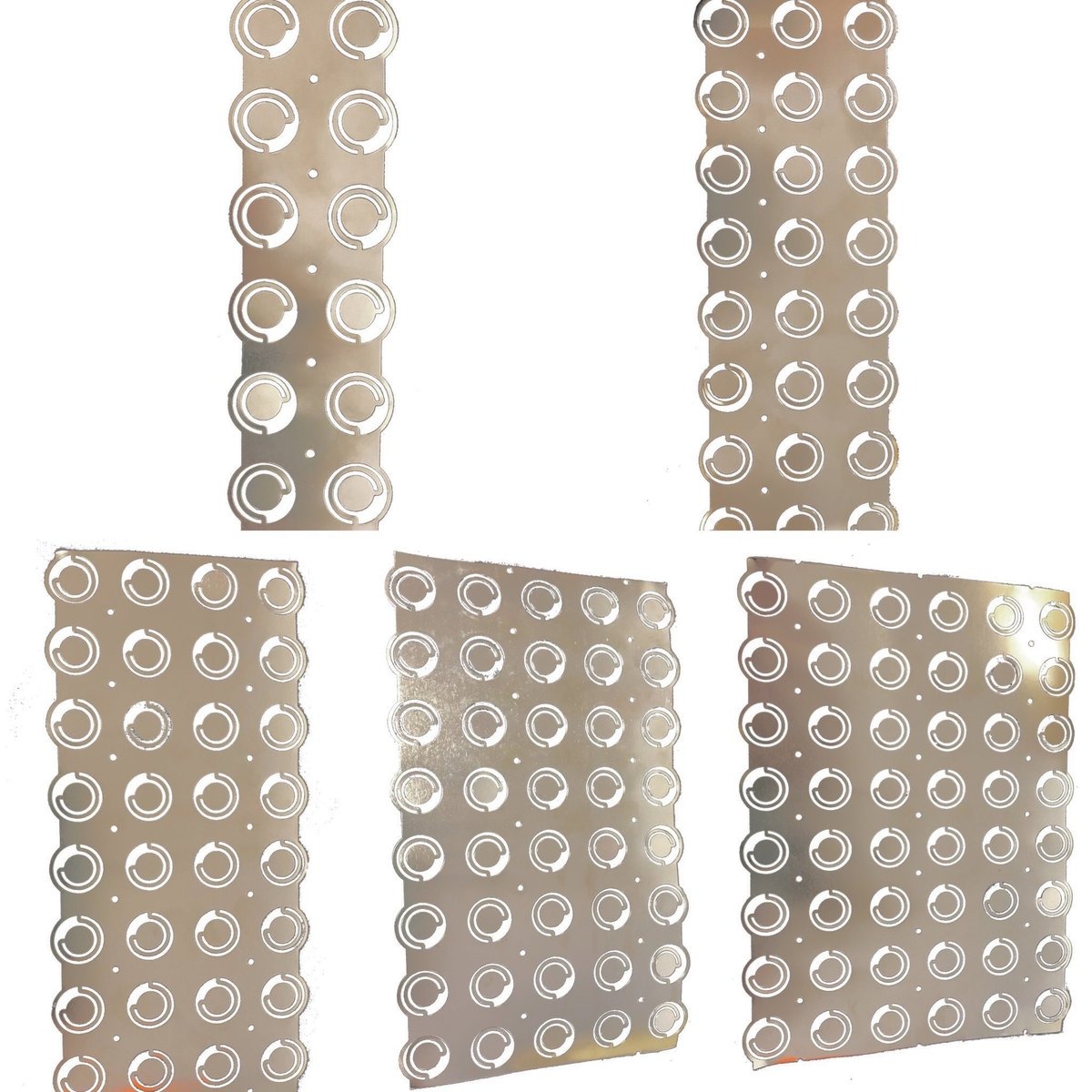
Because lithium-ion cells already include separator shutdown, CID, and PTC protections, cell-level fusing is not strictly required to build a battery that meets commonly accepted safety standards. It is an enhancement rather than a necessity.
The main benefit of cell-level fusing becomes apparent when a single cell fails within a parallel group. Without fusing, neighboring cells can dump current into the failed cell. This additional current heats the damaged cell further and drains the entire parallel group. With cell-level fusing, the electrical connection to the failed cell is physically broken. Current is no longer forced into the failing cell, isolating the fault. The result is a parallel group with reduced capacity and current-sharing capability, but a much lower risk of cascading failure.
It also make the battery a lot easier to repair. Think about it. If you are using cell level fusing and a single cell fails, the other cells in the group won't be drained to zero. Also, it will be super obvious which cell you have to replace when you open up the battery because you will be able to physically see the burned out fuse. You will know exactly where the problem is.
Is Cell-Level Fusing Required for Safety?
No. To build a lithium ion battery that you can honestly and legitimately call safe, you do not have to do cell level fusing. Cell-level fusing may be required for a certain type of battery that is built for a certain type of product or industry. Current industry standards, regulations, and best-practice guidelines for lithium-ion batteries do not mandate cell-level fusing for a battery to be considered safe. Although I will say that I am unsure if the same statement is true in the EV industry. I don't think I have seen a car battery pack that wasn't fused at a cell level.
Undeniably, cell-level fusing an upgrade. If time, budget, and design constraints allow for it, implementing fused series conductors is a solid engineering choice. It adds resilience and limits the impact of individual cell failures. There is nothing wrong with going the extra mile when safety margins matter. We hope this article helped you learn everything you needed to know about cell level fusing in regards to safety. Thanks for reading!