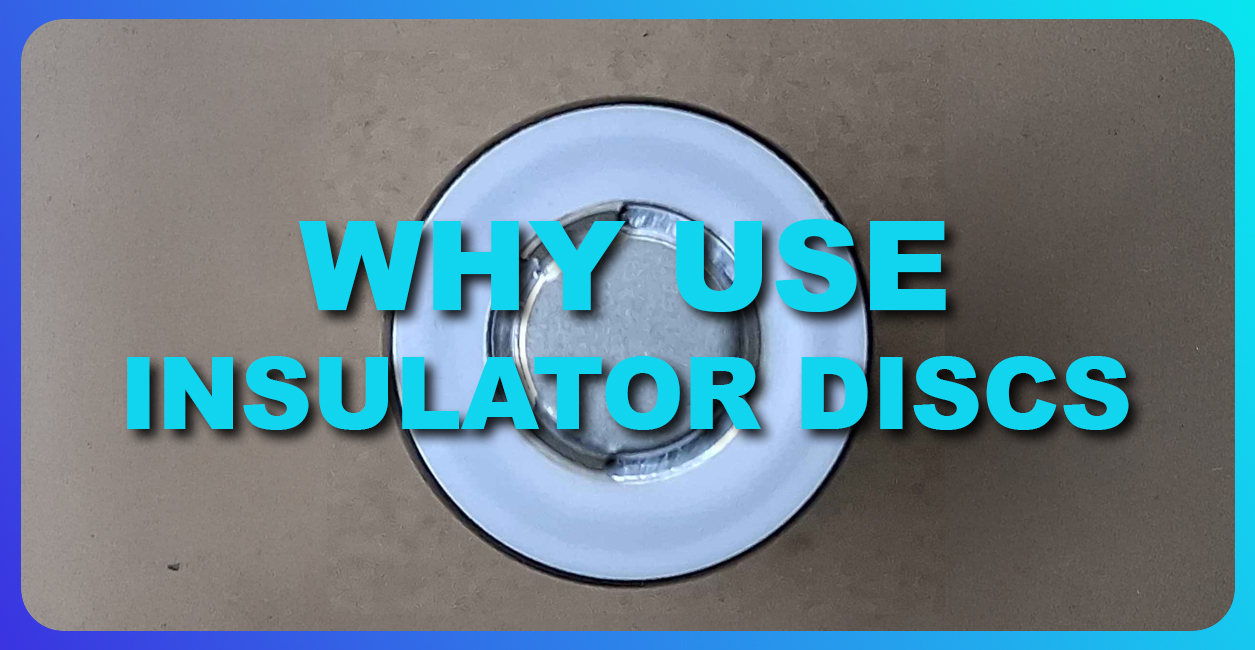
Insulator discs are very effective at preventing the negative and the positive on the top of the cell from becoming shorted. In 18650, 21700, and other cylindrical cells, the entire outside of the cell is the negative, not just the flat end of the cell.
If you follow the negative from the side all the way up to the positive end of the battery, you will see that even at the very top on the perimeter, the battery is all negative. You will find the positive on the inside of the top end of the cell, surrounded by an insulating gasket that separates it from the negative.
What Are Insulator Discs?
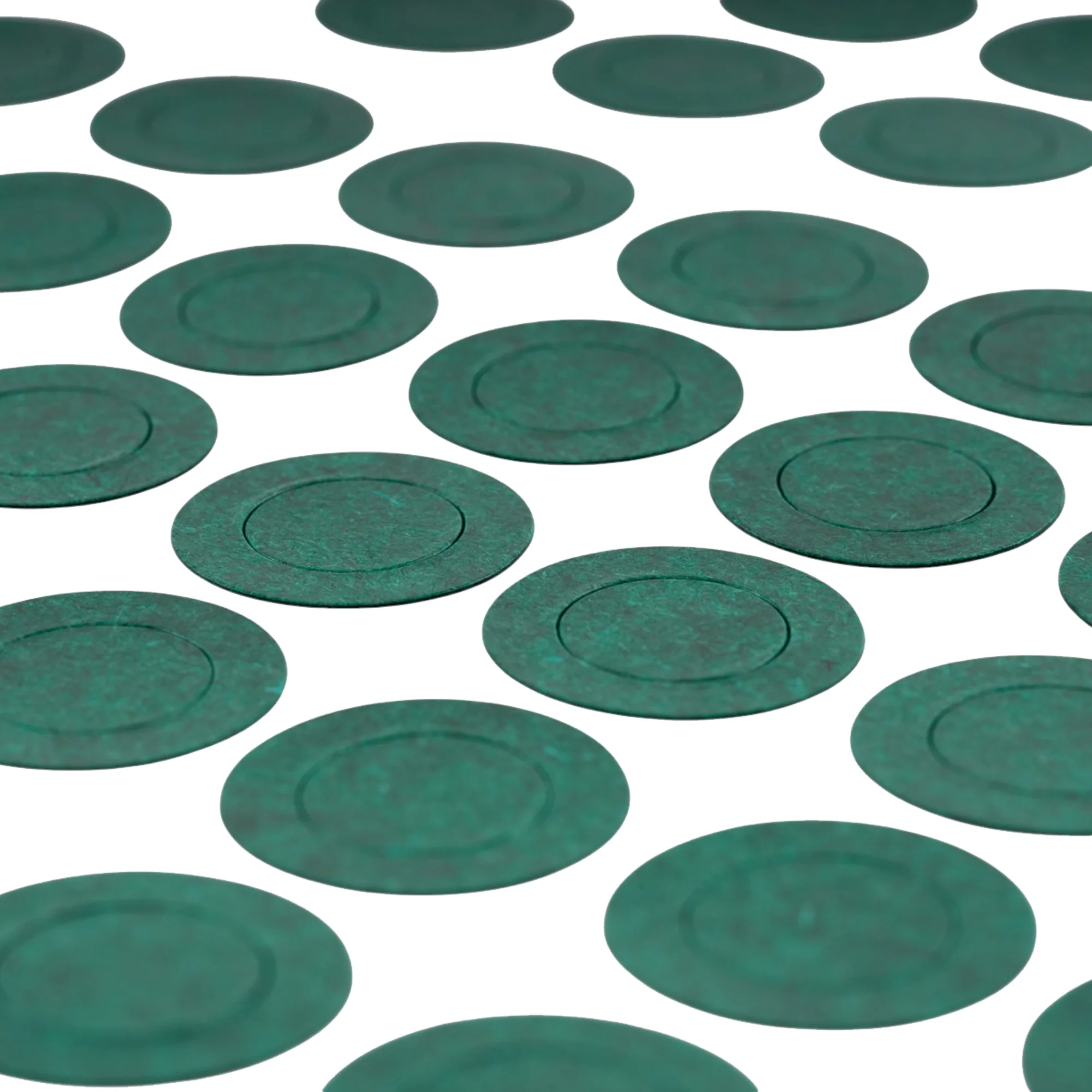
Insulator discs are little pieces of paper cut to the size of the cell that have a hole in the top for the positive. The disc is sized such that when you lay it on top of the cell, it completely covers the insulating gasket that separates the positive and negative.
It also completely covers the surface area of the top of the cell to help prevent shoulder shorts with the negative. They are generally made out of fish paper, and they are green most of the time. But I’ve seen red ones, black ones, and white ones.
Why Are These Things Needed?
If a lithium-ion battery cell is just sitting there doing nothing, it’s not in any kind of position to short out. It would take some metal objects touching the positive and negative ends in the right way to produce a short.
You might think the same thing is true after you weld a battery together, and that only some sort of impact could cause the cells to short out. However, spot welding is a process that’s pretty much done under pressure. It creates a situation where everything is very tightly bound together.
When you weld a bunch of metals together, they pull on each other and impart all kinds of forces throughout the pack. There are also forces that enter the pack through the bike or whatever device it’s running in as it vibrates and comes into contact with things. Those forces are transmitted into the battery.
How Shorts Can Happen Without Insulator Discs
If you have a metal strip welded to the top of a battery pack pressing down on all the positive connections, it’s also pressing down on the negative perimeter of the cell with a considerable amount of force.
The only thing separating those things, if you do not use insulator discs, is just microns of cell wrap. Some people will point out that lithium-ion battery cells have insulator discs built in. But if you take apart just about any lithium-ion battery cell, you will see that the built-in white plastic insulator disc does not fully cover the negative, because it is slightly undersized for the cell.
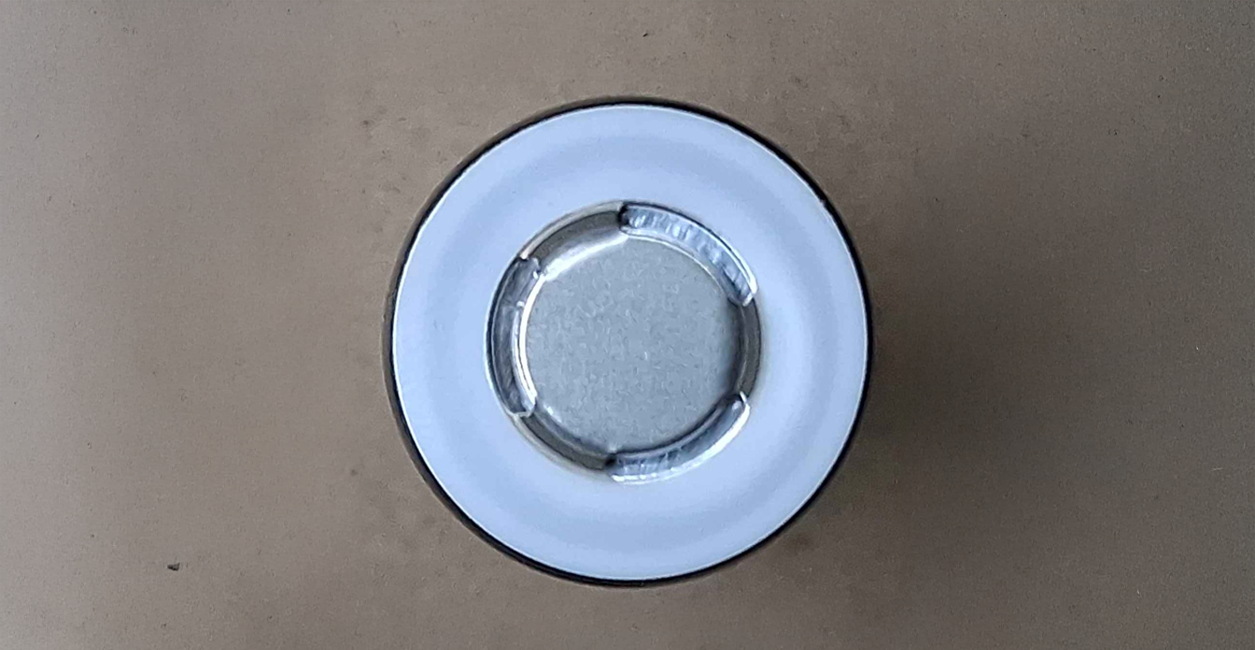
That means when you build a battery, the copper, nickel, or whatever you’re using is pressing down really hard on all of those cell perimeters. It’s not necessarily a ticking time bomb-this can last and be very stable. But it means that if there is any failure (a missing piece of cell wrap, something becomes chafed or rubbed off, or the battery takes a certain kind of impact in a certain kind of way), you are in for a really bad day.
Even then, that is still pretty unlikely.
The Number One Reason to Use Insulator Discs
Honestly, the number one reason to use insulator discs is to protect the battery-and you-during the build process.
When you are making welds and other connections and getting the battery put together, there are several opportunities where you could rub against that area, press too hard when welding, or otherwise make contact in a way that causes a problem. You can get sparks and flashes and stressful moments.
This is especially true if you are new to building batteries and you’re trying to get a good weld while pressing at different spots. Maybe your aim isn’t all that good and you go outside of the normal area to weld just a little bit.
If you have a paper insulator disc there, most of the time nothing is going to happen. But if you don’t have a paper insulator disc there and you weld the series conductor (that’s already welded to other positive connections) to a negative connection, you’re going to have a very, very bad day-and possibly a broken welder.
How Important Are Insulator Discs, Really?
Insulator discs are not an absolutely critical component of battery design, but they are still extremely important. It’s not as bad as not doing any kind of series cell spacing, which in my opinion is just a ticking time bomb.
Adding insulator discs is something you can easily do to dramatically increase safety during the build process and moderately increase safety during the use of the battery. It’s extremely cheap, very easy to do, and kind of hard to mess up-unless you put insulator discs on the negative ends too, which is completely pointless. But I see people doing that sometimes.
Final Thoughts
If you built a battery without insulator discs, you don’t have to be ashamed of it and you don’t have to be worried about it. But if you did put insulator discs on the battery that we’re thinking about in this example, you would have one less thing to worry about.
I hope this article helped you learn everything you need to know about fish paper insulator discs for lithium-ion batteries. Thanks for reading.