Table of Contents
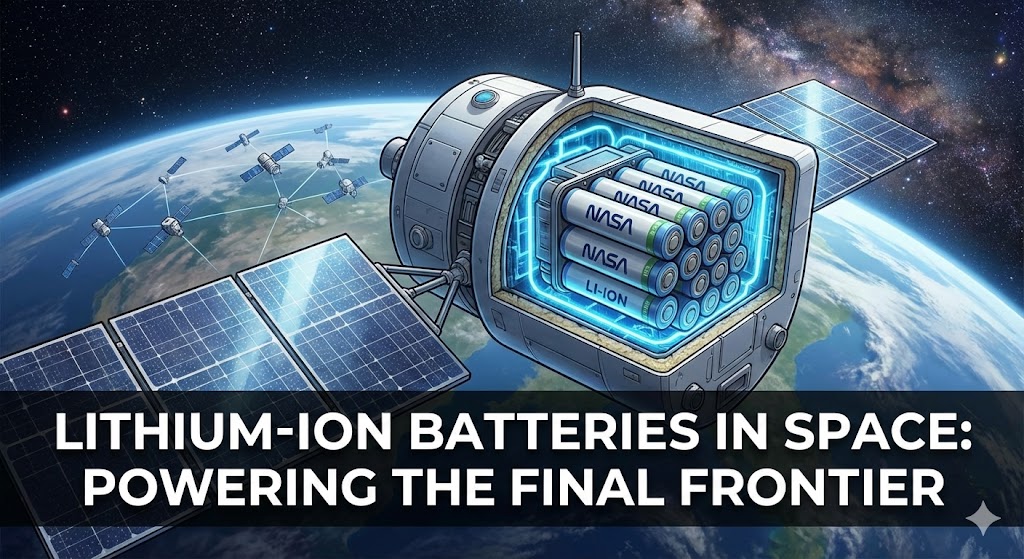
Lithium-ion batteries are used in space. Not only are they used in space, they are absolutely mission critical. NASA documentation describes lithium-ion batteries as the most commonly used battery technology across space applications such as satellites, probes, and transportation systems. In this article, we'll talk about the challenges, benefits, and other things you need to consider when using lithium-ion batteries in space.
Advantages of Using Lithium-Ion Batteries in Space
So, what are the advantages of using lithium-ion batteries in space? Despite the fact that SpaceX, Blue Origins, and other companies have made space travel a lot cheaper, it's still very expensive per pound and per unit of volume to get things into space. So, like everything else that goes up, the smaller the better.
Lithium-ion batteries have a massive advantage over other battery technologies in terms of energy efficiency, size, usable power, and cycle performance. The higher energy density is helpful because it means you can have a smaller battery that stores more energy. That means you can have a smaller, lighter system that performs the same job as an otherwise larger, heavier system.
The charge and discharge process of a lithium-ion battery is much more efficient compared to older battery technologies that were used in space. This means you get more usable power out of each charge cycle and every milliwatt hour matters in space. The good cycle performance is helpful because it means you have to carry less batteries on the mission.
Disadvantages and Challenges
Thermal Disadvantages
But there are some disadvantages that come with using lithium-ion batteries in space. The main disadvantages are thermal disadvantages. In space, a battery is generally pretty much always too hot or too cold. It's never at the right temperature and you have to do a lot of stuff to either pull the temperature up or bring the temperature down.
They use things like battery heaters, radiators, heat straps, heat plates, and they even place batteries inside warm electronics boxes that have other circuits and things in there generating their own heat. All of these different devices and systems are linked together so that the battery cells can operate in a narrow optimal band.
Remember, there is no air in space, so there's nothing for the heat to naturally radiate energy away from the battery. This might seem counterintuitive, but as it turns out, the vacuum of space is a very effective thermal insulation, at least for that kind of heat.
That's literally why we still have lava on Earth. That's literally from the creation of Earth billions of years ago, and it's still hot from the friction of falling together.

Radiation
Radiation. Just like Mars, lithium ion battery cells do not have a strong internal magnetic field. So, like Mars, when you're using lithium ion battery cells in space, they are completely bathed in radiation.
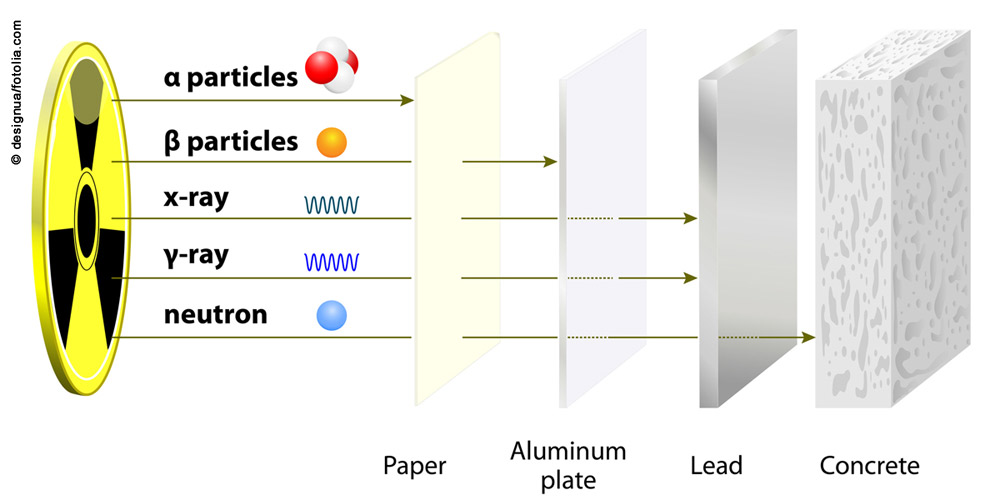
What exactly is radiation? Well, basically, it's pieces of stuff moving really, really fast. You know, there's different kinds of radiation, but the radiation we're talking about, these are like alpha particles, beta particles. They are chunks of atoms, pieces of stuff. Don't get me wrong. There are plenty of high energy photon radiations out there, but I'm talking about the chunks that come from stars, black holes, quasars, collisions, all kinds of things that happened a long time ago and very far away, and it's just spraying out into space at all times. That's pretty much it.
We would be completely bathed in these same things, and to some degree we are, but most of it is filtered out due to our magnetic field. Earth has a massive magnetic field because it's mostly liquid metal moving around, creating a dynamo. Lithium ion batteries don't have that, and they're also not made out of lead.
So, the radiation makes its way inside of the battery cell and starts to damage the chemistry. The chemistry inside the battery cell gets damaged in the same way as your cells and DNA would get damaged from radiation, which would cause cancer or something like that. It literally happens because these fast-moving particles legit knock off parts of the atoms that make up the battery's chemistry. This can cause the atoms and molecules that the chemistry is made out of to unpredictably change into other things, or at least some percentage of it to unpredictably change into other things.
The effects of radiation exposure on a battery can include increased resistance, increased self-discharge, and capacity fade.
Radiation Effects Beyond the Cell
That radiation, though, can hurt a lot more than just the cell chemistry. There's also all the normal things you have to worry about when operating chips and circuit boards in space. You can get memory errors, single bit flips, resets, memory corruption. You have to worry about all of that stuff because just like on Earth, when you're operating lithium ion batteries in space, you have to use a BMS.
Why Lithium-Ion Still Makes Sense
So, there are plenty of pros and cons to using lithium ion batteries in space, but you can see that all of the cons, such as the radiation exposure and the thermal management and all of that, pretty much apply to other battery technologies, too. So, lithium ion batteries are really great for batteries in space.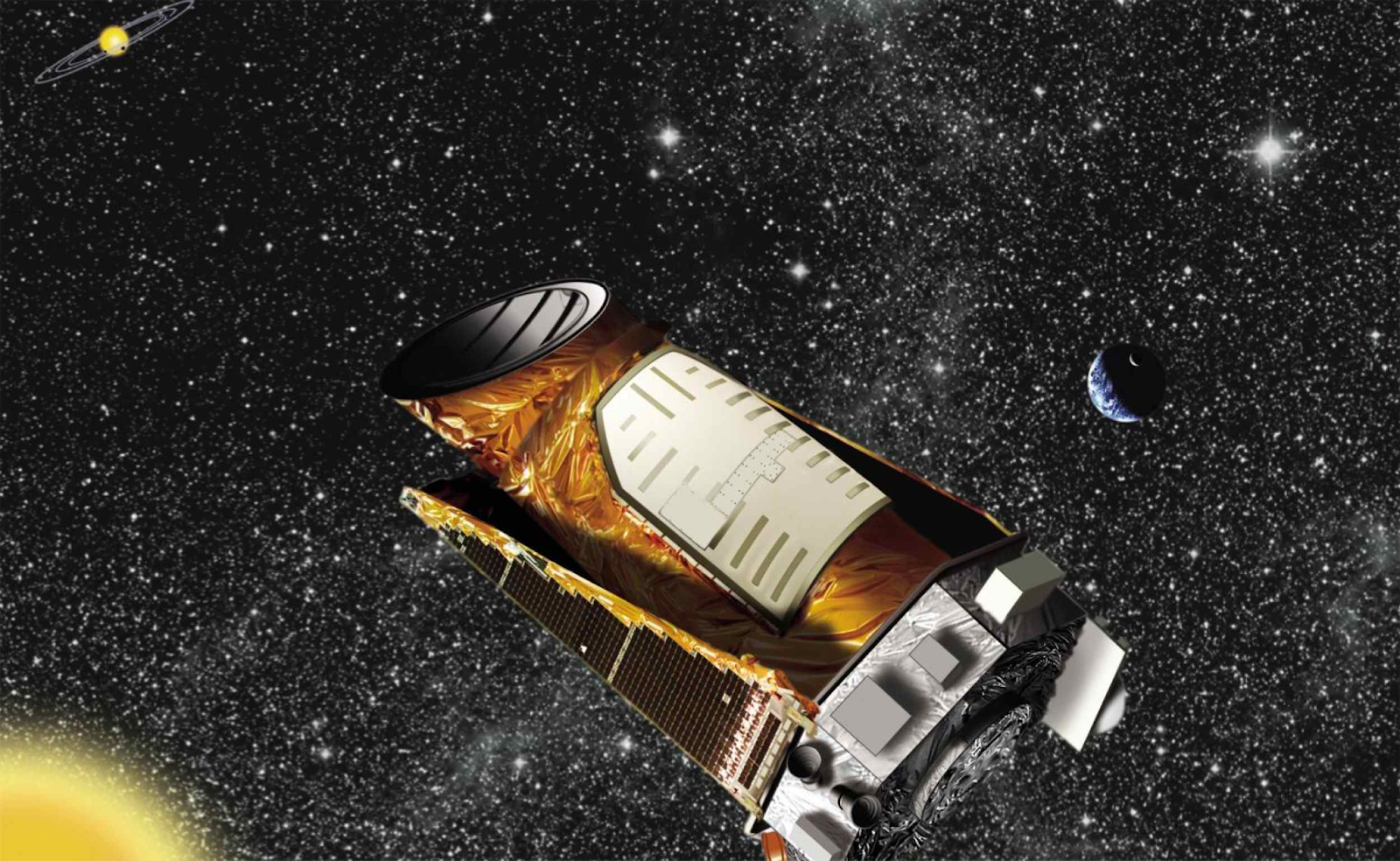
Do They Use Normal Off-the-Shelf 18650s in Space?
Do they use real, normal, off-the-shelf, 18650s in space? Yes, NASA has used several commercial, off-the-shelf, 18650 batteries on multiple missions, including Kepler, NuSTAR, Aquarius, and the Soil Moisture Active Passive project.
In fact, the Ingenuity Mars helicopter uses six Sony SEUS 18650 VTC4 battery cells. There are 18650s on Mars, man. Humans are really out here doing stuff.
Do Lithium Ion Batteries Work In Zero G?
Absolutely. The chemistry works just fine. I would say something about the zero gravity environment and how you can't depend on gravity in your battery design, but really, no one should be depending on gravity in their battery design. You should be able to operate a lithium ion battery on Earth in any orientation without any problem.
Can You Charge a Lithium-Ion Battery in Space?
Can you charge a lithium ion battery in space? Absolutely. Satellites depend on this. Satellites will commonly use their solar exposure to charge their lithium ion battery packs, and then when they do not have access to the sun, they discharge those battery packs. This is why it's important to have a high cycle life when operating batteries in space.
Conclusion
Lithium-ion batteries don’t just work in space, but are instead a foundational, mission-critical power source that’s used across modern spacecraft, satellites, probes, and transportation systems. Lithium’s high energy density, great efficiency, and excellent cycle life make it the battery of choice for NASA.
It's also important to recognize that space is a harsh, inhospitable environment for anything, let alone a battery. Lithium-ion packs have to be carefully engineered around extreme thermal conditions and constant radiation exposure that can degrade performance over time and create reliability risks for both the cells and the supporting electronics.
That’s why space-grade battery packs depend heavily on robust thermal management, shielding, and a dependable battery management system. That pretty much wraps it up for this article. I hope you learned everything you wanted to know about lithium ion batteries in space. Thanks for reading!
Turn the guide into a real build plan
If this article is part of an actual battery, powerwall, or pack-design project, the next step is usually moving from theory into the calculators and planning tools.